
FL Statute 679.6141: Fight Deficiency Balances After Repo in Orlando
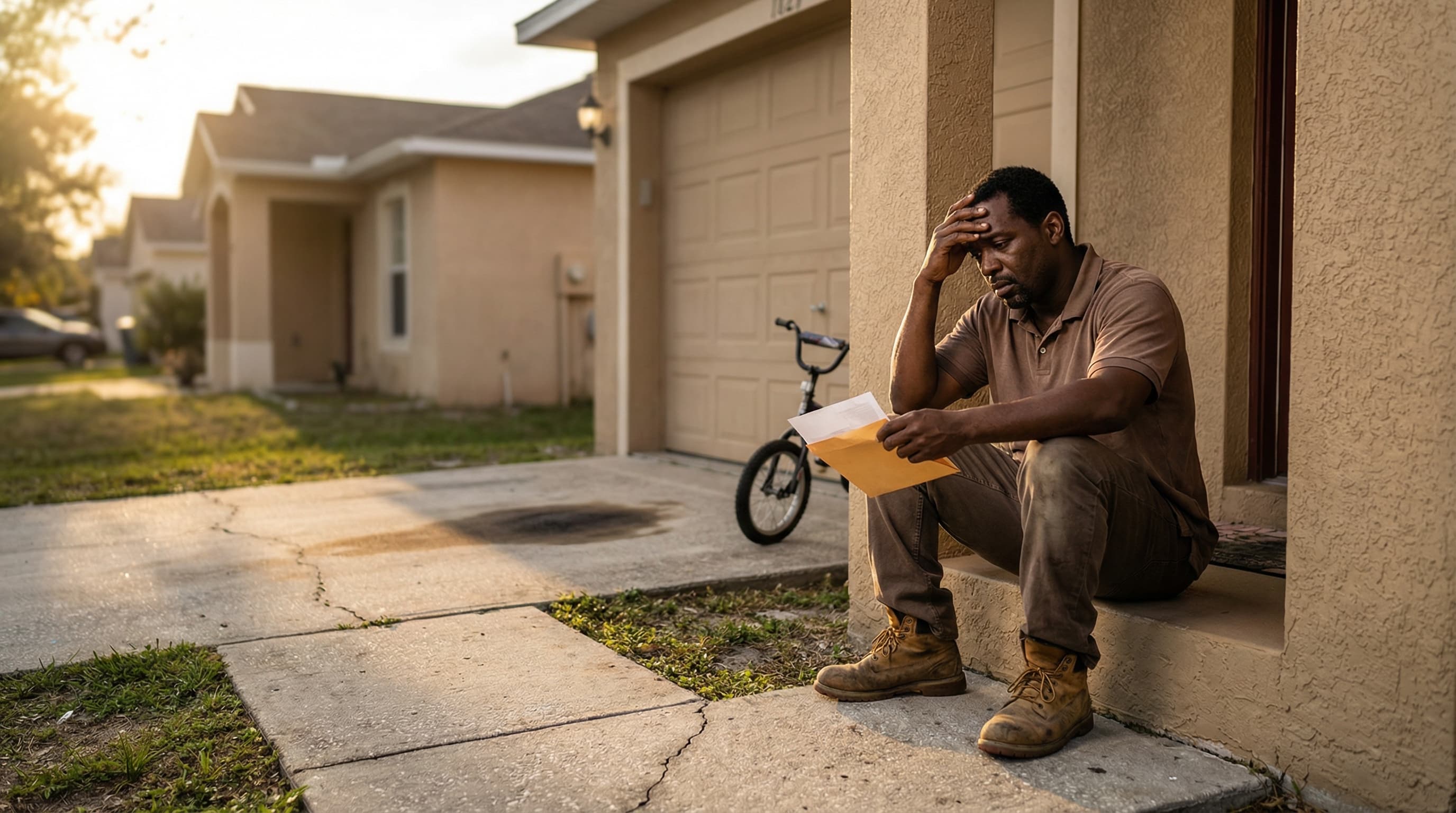
What You'll Learn
- The specific Florida statutes that can eliminate or reduce a deficiency balance after repossession — and why most Orlando residents have never heard of them
- What happens to your credit, wages, and bank account if you ignore a repo deficiency judgment (hint: it's worse than you think)
- The exact federal law that forces debt collectors to prove they own your debt and that the amount is accurate — before they can collect a dime
- A step-by-step action plan to challenge a deficiency balance using Florida's UCC Article 9 provisions (FL Statutes 679.610, 679.614, 679.625–679.626) and the FDCPA — including real timelines, letter templates, and what to do when they stall
Your Car Is Gone. Now They Want More Money.
You already lost the car. That part stung enough — watching them hook it up and roll it down the street while your neighbor pretended not to look.
But then the letter arrives. Thirty days later, maybe sixty. And it says you owe $8,000. Or $12,000. Or some number that makes zero sense because the car was worth $15,000 and your loan was $18,000 and somehow, after they "sold" it at auction, you still owe $11,500.
That's a deficiency balance. And in Orlando, I see this destroy people's financial lives every single week.
![[IMAGE:2] Instructional Visual — Top-down overhead shot of a clean wooden desk with a clear visual flow from left to right. O](/_next/image?url=https%3A%2F%2Ftyyvgkzyojviljefkhzv.supabase.co%2Fstorage%2Fv1%2Fobject%2Fpublic%2Fimages%2Fblog%2Ffl-statute-679-6141-fight-deficiency-balances-after-repo-in-orlando%2Fbody-1.jpg&w=3840&q=75)
Here's what most people do: they shove the letter in a drawer. They screen the calls. They tell themselves it'll go away.
It won't.
I had a client in Ocoee last year — great example of how these things spiral. She wasn't even dealing with a car repo initially. An Orlando Health facility double-billed her $1,800 for a procedure her insurance had already covered. She knew it was wrong, so she ignored it. "They'll figure it out," she said. They didn't figure it out. A collections agency bought that phantom balance, slapped it on her credit report, and suddenly her score dropped 87 points. She couldn't refinance her mortgage. She couldn't get approved for an apartment when her lease was up.
Same pattern I see with repo deficiency balances. You ignore the letter. A third-party collector buys the debt for pennies. They report it. Now you've got a repo AND a collection AND possibly a judgment — all from one bad situation.
Stop ignoring your mail.
The Scare: What Happens If You Do Nothing
Let me paint the picture clearly, because "Imagine 'Steve'..." doesn't cut it here. This is what actually happens to real people in Orange, Osceola, and Seminole counties.
Phase 1: The Collection Letters (Days 30-90) The original lender — Ally Financial, Capital One Auto, whoever — either sends you a deficiency notice or sells the remaining balance to a junk debt buyer like Midland Credit Management or LVNV Funding. You get letters. You get calls. You ignore them.
Phase 2: The Credit Report Hit (Days 60-120) The collector reports the balance to all three bureaus. Your score drops — sometimes 100+ points. If you were sitting at 640, you're now at 530. Good luck renting anything decent in Orlando at 530. Even the complexes off OBT that used to be lenient are running hard credit pulls now.
Phase 3: The Lawsuit (Months 4-12) Here's what surprises people. In Florida, creditors have five years to sue you for a deficiency balance on a written contract. Five years. And they will use every one of those years if they need to. I've seen Midland file suits in Orange County Civil Court against people who thought the whole thing was dead and buried three years ago.
Phase 4: The Judgment (If You Don't Respond) If they sue and you don't show up, the judge enters a default judgment. Now they can garnish your wages. In Florida, wage garnishment can take up to 25% of your disposable income. If you're a Disney cast member making $17/hour biweekly, that's real money disappearing from your check. They can also levy your bank account.
Real talk — I've watched clients lose $3,400 from a Bank of America checking account overnight because a judgment creditor served a writ of garnishment they never saw coming.
This is what "doing nothing" looks like. It's not a strategy. It's surrender.
The Loophole: Florida's UCC Article 9 Provisions and Why They Change Everything
OK so here's where it gets interesting.
Florida adopted UCC Article 9 into state law, and several statutes work together to govern deficiency balances after a secured creditor repossesses and sells your collateral. Here's the breakdown:
- FL Statute 679.611 and 679.614 — govern the notice a creditor must send you before they sell the vehicle
- FL Statute 679.610 — requires the sale itself to be conducted in a "commercially reasonable" manner
- FL Statute 679.625 and 679.626 — spell out the remedies when a creditor screws up the process, including reducing or eliminating the deficiency balance entirely
That phrase — "commercially reasonable" — is your weapon.
![[IMAGE:3] Local Proof — The front entrance of the Orange County Courthouse in downtown Orlando on a humid, hazy late afternoo](/_next/image?url=https%3A%2F%2Ftyyvgkzyojviljefkhzv.supabase.co%2Fstorage%2Fv1%2Fobject%2Fpublic%2Fimages%2Fblog%2Ffl-statute-679-6141-fight-deficiency-balances-after-repo-in-orlando%2Fbody-2.jpg&w=3840&q=75)
Here's what the lender has to prove under these statutes:
- They gave you proper pre-sale notice — for a public sale (like an auction), this means the time and place of the sale; for a private sale, this means the time after which the sale will happen. Either way, they have to send compliant notice and be able to prove it.
- The sale itself was commercially reasonable under FL Statute 679.610 — meaning they didn't dump your car at a closed-bid auction at 6 AM on a Tuesday to their buddy's lot for $800 when it was worth $6,000
- They applied the sale proceeds correctly to your outstanding balance, minus reasonable costs
- They can produce documentation of every step — the repo order, the condition report, the auction records, the final accounting
Know what the best part is? The burden of proof is on THEM. Not you.
Under FL Statute 679.626, if the creditor can't prove commercial reasonableness, the court can reduce the deficiency to zero or limit it to the amount a compliant sale would have generated. The exact outcome depends on your specific facts and whether the transaction qualifies as a consumer-goods transaction — but the point is, their failure to follow the rules becomes your leverage.
I've been doing credit repair in Orlando for 20 years. In my experience, roughly 60-70% of deficiency balances I review have at least one procedural defect. The lender didn't send proper notice. The auction price was suspiciously low. The accounting doesn't add up. They can't produce the original repo authorization.
These aren't technicalities. These are your rights under Florida law.
The Federal Layer: FDCPA Section 809
Now stack this with federal law.
The Fair Debt Collection Practices Act — specifically FDCPA Section 809 — gives you the right to demand debt validation within 30 days of first contact from a collector. Here's the thing most people get wrong: that 30-day window is your deadline to trigger the strongest protections. If you dispute within those 30 days, the collector must stop all collection activity until they mail you validation. Miss that window and you can still request validation (and you should), but they're not legally required to pause collection while they get back to you — they just have to mark the debt as disputed.
When they do respond, they have to provide:
- The amount of the debt
- The name of the original creditor
- Verification that the debt is valid
Now here's the practical reality — courts have sometimes accepted pretty bare-bones responses as "validation" under Section 809. The statute doesn't explicitly force them to hand over the original loan agreement, the full repo file, and the chain of title. But you can absolutely request all of that — the original loan agreement, repossession records, sale documentation, and the deficiency calculation. And here's why you should: if they can't or won't produce meaningful support for the amount they're claiming, that weakness feeds directly into your FCRA disputes and your commercial reasonableness challenge under Florida law. It's ammunition, even if it's not an automatic kill shot.
Remember my client in Ocoee with the Orlando Health double-billing? Same principle. I sent a debt validation letter under FDCPA Section 809 to the collector who'd bought that $1,800 phantom balance. They couldn't produce an itemized statement matching the original provider's records — because the debt was bogus. The insurance had already paid. We escalated through the CFPB and bureau disputes. Deleted from all three bureaus within 22 days.
The collector was banking on her giving up. They counted on her not writing that letter. That's how this industry works.
The State-Level Bonus: Florida's FCCPA (Chapter 559)
Here's something most people — and honestly, a lot of credit repair companies — completely overlook. Florida has its own consumer collection law: the Florida Consumer Collection Practices Act, FL Chapter 559 (specifically Section 559.72).
Why does this matter? Because the federal FDCPA only applies to third-party debt collectors. Your original lender — the bank or finance company that actually made the loan — can dodge most FDCPA requirements. But FL Section 559.72 applies to original creditors too. So if your lender is engaging in harassing conduct, misrepresenting the amount you owe, or threatening actions they can't legally take, you've got a state-level claim even when the feds can't help you.
I bring this up because a lot of repo deficiency disputes involve the original lender directly — not just some junk debt buyer. The FCCPA gives you a weapon against both. [INTERNAL_LINK:orlando-credit-repair]
The Key Nobody Talks About: Follow Up and Persistence
I need to stop here and tell you something that's more important than any statute or section number I can throw at you.
The process is slow. On purpose.
Creditors and collectors don't move fast because speed benefits you. They drag it out — response windows, "processing delays," letters that "got lost in the mail," transferred accounts that require you to "start over" with a new department.
They're playing a game of attrition. They're betting you'll send one letter, wait six weeks, hear nothing, and quit.
I can't stress this enough: the key is follow-up and persistence. Every single successful deficiency balance dispute I've handled — every one — required multiple rounds of communication. Not one letter. Not one phone call. A sustained campaign.
I had a client in Kissimmee who was fighting a $9,200 deficiency balance from a 2019 Nissan Altima repo. We sent the initial validation letter. Thirty days — nothing. We sent a follow-up demanding they acknowledge receipt, citing their FDCPA obligations. Two weeks later, a vague form letter arrived that didn't actually validate anything. We sent a third letter pointing out the deficiencies in their response and filed a complaint with the CFPB simultaneously.
Seven weeks after our first letter, they folded. Couldn't produce the auction records. The deficiency was withdrawn and the tradeline updated.
Seven weeks. Three letters. One CFPB complaint. That's what persistence looks like.
If he'd sent one letter and quit? He'd still owe $9,200.
The Action Plan: How to Fight a Deficiency Balance Step by Step
Here's the exact playbook. Follow it in order. Don't skip steps. [INTERNAL_LINK:debt-validation-letter]
Step 1: Pull All Three Credit Reports (Day 1)
Go to AnnualCreditReport.com — it's free, it's legit, it's the only site you should use. Pull Equifax, Experian, and TransUnion.
Find the deficiency balance. Write down:
- The creditor's name (original lender AND collector if different)
- The reported balance
- The date of first delinquency
- The account number
Step 2: Send a Debt Validation Letter Under FDCPA Section 809 (Days 1-5)
If you're within 30 days of the collector's first written contact, this is your strongest move — they must cease collection until they mail you validation. If you're past that 30-day window, send the letter anyway. You can still request validation at any time, and even though they're not required to pause collection after that window closes, most collectors will still respond. Either way, the request creates a paper trail that strengthens every future dispute.
Your letter should request:
- A copy of the original signed loan agreement
- Complete repossession and sale documentation
- An itemized accounting of the deficiency calculation (original balance, minus sale proceeds, minus payments, plus any fees — broken down line by line)
- Proof that the collector is authorized to collect the debt (the assignment or purchase agreement)
Will they hand over every single item? Maybe not — courts have sometimes accepted less as "validation." But requesting it all does two things: it puts them on notice that you're not rolling over, and any gaps in their response become ammunition for your bureau disputes and your Florida commercial reasonableness challenge.
Send it certified mail, return receipt requested. Spend the $4. I don't care if it feels old-school. That green card is courtroom evidence.
Step 3: Challenge Commercial Reasonableness Under FL Statute 679.610 (Days 5-10)
In a separate letter to the original lender (not the collector — the lender), request:
- The pre-sale notification they sent you (date, method, content)
- Records of the auction or private sale (date, location, winning bid)
- A vehicle condition report at time of repossession
- An appraisal or valuation used to set the reserve price
If they sold your $12,000 car for $3,500 at a dealer-only auction and can't explain why, that's a commercial reasonableness problem under 679.610. And that problem is your leverage under FL Statute 679.626, which can reduce or eliminate the deficiency.
If the original lender is also engaging in collection conduct that looks shady — misrepresenting amounts, threatening actions they can't take — remember you've also got FL Chapter 559.72 (the FCCPA) in your back pocket. That one applies to original creditors, not just third-party collectors. [INTERNAL_LINK:repo-credit-repair]
Step 4: Wait 30 Days — Then Follow Up Immediately (Days 30-35)
This is where most people fail. They send the letters, feel good about it, and wait.
Day 31 rolls around with no response? Send a follow-up letter that same week. Reference your original letter by date. Note that you requested validation, that they haven't responded, and that you consider the debt disputed and unverified. (Quick note: the FDCPA doesn't give collectors a hard 30-day deadline to respond to your validation request — that's often confused with the FCRA's 30-day investigation window. But your follow-up still matters. It builds pressure, creates a paper trail, and shows you're not going away.)
Copy the follow-up to the Consumer Financial Protection Bureau (CFPB) and the Florida Attorney General's office. Mention in the letter that you've done this.
Watch how fast they respond when a federal regulator's name is in the CC line.
Step 5: Dispute with the Credit Bureaus Under FCRA Section 611 (Days 35-40)
Once the collector fails to validate — or provides incomplete validation — file disputes with all three credit bureaus. [INTERNAL_LINK:credit-bureau-dispute-process]
Under FCRA Section 611, the bureaus have 30 days to investigate. If the furnisher (the collector) can't substantiate the account during that reinvestigation — or if the bureau can't complete a reasonable investigation — the bureau must delete or modify the tradeline. Now, I want to be straight with you: a collector's failure to validate under the FDCPA doesn't automatically trigger a bureau deletion. They're two different laws. But it's damn strong supporting evidence for your FCRA dispute, and in practice, it's often the thing that tips the scale.
Your dispute should say: "This deficiency balance is disputed. Collector failed to provide meaningful validation per FDCPA Section 809. I am also challenging the commercial reasonableness of the underlying sale under FL Statutes 679.610 and 679.626. Please investigate and remove."
Step 6: Don't Stop. Seriously. (Days 40-90+)
If the bureau comes back and says "verified," dispute again with new information. Request the method of verification. Ask for the name and contact information of the person who verified it.
I'm not exaggerating when I say some of my most successful cases took three or four rounds of disputes. The system is designed to exhaust you. They want you to give up. That's the business model.
Every time you follow up, you increase the cost of keeping that tradeline active. At some point, it becomes cheaper for them to delete it than to keep responding to your disputes.
That's when you win.
Step 7: Know When to Call in Help
Look — I'm always going to tell you that you can do this yourself. Because you can. Everything I've described is legal, free (except postage), and available to every consumer.
But if you're drowning in paperwork, if you've sent three letters and gotten nowhere, if you've been sued and don't know how to respond — that's when you call someone like me.
At Freedom Credit Repair, this is literally all we do. We fight deficiency balances, challenge repo documentation under Florida's UCC Article 9 provisions, and hold collectors accountable when they cut corners. We've seen every trick in the book because we've been in this fight for 20 years in Central Florida.
A lot of people ask us how the whole process works — we've got a solid rundown on our FAQ page that covers timelines, costs, and what to expect.
Book Your Free Credit Consultation
Take the first step toward better credit. Our experts are ready to help you in Orlando and across Florida.
The Persistence Mindset: Why Most People Lose Winnable Fights
I want to come back to something because it's the single biggest factor in whether you succeed or fail.
The credit repair and debt dispute process is not a sprint. It's not even a marathon. It's a war of attrition — and the other side has been fighting it longer than you have.
Collectors have automated systems that generate form letters. They have compliance departments that know exactly how long they can stall before technically violating the FDCPA. They have attorneys on retainer who file lawsuits in bulk.
You have one advantage they don't have: you only have to win YOUR case.
When I first started in credit repair 20 years ago, I thought the hard part was knowing the law. It's not. The hard part is getting clients to keep going after the second letter gets no response. Or after the bureau "verifies" an account they clearly never investigated.
Honestly, most people don't realize how close they are to winning when they quit. I've had clients come to me after abandoning a DIY dispute that was one letter away from resolution. One more certified letter. One CFPB complaint. That's all it would've taken.
The system rewards persistence. Full stop.
Set a calendar reminder. Every two weeks, check the status. Every 30 days, send a follow-up. Document everything. Keep copies of every letter, every return receipt, every bureau response.
This drives me crazy — I'll have a client tell me they sent a dispute letter "a few months ago" and I'll ask for the copy. They didn't keep one. No proof it was ever sent. We have to start over.
Keep. Copies. Of. Everything.
Repo Deficiency Balance Orlando — What Makes Our City Different
Orlando isn't like other cities when it comes to repo deficiency balances. Here's why.
Our economy runs on hospitality, tourism, and healthcare. That means a huge percentage of the workforce deals with seasonal income swings, tip-based pay, and irregular schedules. When a server on I-Drive has a slow January (and they always have a slow January), the autopay bounces. Two bounces and the lender starts the repo clock.
I see this pattern constantly with clients who work at Universal, SeaWorld, the convention center — they're not irresponsible. They're dealing with an income structure that traditional auto lending doesn't account for.
Then there's the predatory lending side. If you've driven down OBT or East Colonial, you've seen the "Buy Here Pay Here" lots. Some of those dealers build repos into their business model. They sell you a car at 22% interest, repossess it when you're 30 days late, resell it to the next person, and come after you for the deficiency. Same car, three different buyers, three different deficiency balances.
Florida's UCC Article 9 provisions — specifically FL Statutes 679.610 and 679.626 — exist specifically to prevent this kind of abuse. If the sale wasn't commercially reasonable — and a dealer reselling the same car at a markup certainly raises that question — you have a legal basis to challenge the deficiency. [INTERNAL_LINK:orlando-credit-repair]
Frequently Asked Questions
Can a creditor still come after me for a deficiency balance in Florida after they repossessed my car?
Yes. Under Florida law, repossession doesn't cancel the debt. If the car sells at auction for less than you owed, the lender can pursue you for the difference — that's the deficiency balance. However, FL Statutes 679.610 and 679.625–679.626 require that every step of the repo and sale process was commercially reasonable. If it wasn't, you have grounds to challenge or eliminate the deficiency entirely.
How long does a creditor have to sue me for a deficiency balance in Florida?
Five years from the date of default for a written contract under Florida's statute of limitations. Don't assume they've forgotten about you. I've seen lawsuits filed at the four-year-and-eleven-month mark. The clock is ticking for them, but five years is a long time.
What does "commercially reasonable" mean under Florida's UCC Article 9?
It means the creditor handled the sale in a way that a reasonable business would — proper notice to you before the sale (time and place for a public auction, or the time after which a private sale will happen), a sale method likely to produce a fair price, and transparent accounting of the proceeds. If they dumped your car at a closed auction for a fraction of its value without proper notice, that's not commercially reasonable under FL Statute 679.610. And that's your opening — FL Statute 679.626 gives the court power to reduce or wipe out the deficiency.
Can I get a repo deficiency balance removed from my credit report?
Absolutely — if the collector can't validate the debt under FDCPA Section 809, or if the sale violated FL Statute 679.610's commercial reasonableness standard. A failed validation isn't an automatic deletion, but it's strong evidence for your FCRA Section 611 dispute. File disputes with all three bureaus, include your documentation, and follow up relentlessly. We get this question all the time — check out our FAQ for more details on how the dispute process works.
Should I hire a credit repair company or do this myself?
You can do it yourself. Everything in this article is actionable without paying anyone. But the process is slow, detail-heavy, and the other side is counting on you quitting. If you want someone in your corner who's done this thousands of times — someone who'll handle the follow-ups, the documentation, the escalations — give us a call at Freedom Credit Repair. (407) 606-7117. We're right here in Orlando.
Ready to Fight Back?
If you're staring at a deficiency balance on your credit report right now — whether it's $4,000 or $14,000 — you have options. Real, legal, actionable options under Florida's UCC Article 9 provisions, the FDCPA, and the Florida Consumer Collection Practices Act.
But options don't mean anything if you don't act on them. And acting once doesn't mean anything if you don't follow through.
Call us at (407) 606-7117 or visit Freedom Credit Repair to schedule a free consultation. We'll pull your reports, review the deficiency, and tell you straight — is this one we can fight? And if so, here's exactly how we're going to win.
No fluff. No promises we can't keep. Just a plan and the persistence to see it through.
Book Your Free Credit Consultation
Take the first step toward better credit. Our experts are ready to help you in Orlando and across Florida.

Matt Brody
Founder, Freedom Credit Repair
Matt is the founder of Freedom Credit Repair based in Orlando, FL. With years of experience helping clients remove negative items from their credit reports, Matt is passionate about empowering people to take control of their financial future. Call (407) 606-7117 for a free consultation.